
In sports, physical ability often gets the loudest attention. Speed, strength, endurance, technique, and skill are easy to see from the outside. A faster runner looks faster. A stronger player looks stronger. A sharper shot or cleaner swing is obvious. But behind nearly every strong performance is something quieter: focus.
Focus is what helps an athlete stay present when the score is tight, the crowd is loud, or the body is tired. It is what keeps a tennis player locked in between points, a footballer aware of space, a basketball player calm at the free-throw line, and a runner steady when fatigue starts whispering doubts. Without focus, even good technique can fall apart under pressure.
That is why sports focus drills matter. They train the mind to stay alert, filter distractions, and respond with intention instead of panic. Mental sharpness is not just something athletes are born with. Like footwork or stamina, it can be practiced, shaped, and improved over time.
Why Focus Matters So Much in Sports
Focus in sports is not simply about “paying attention.” It is about knowing where to place attention at the right moment. Sometimes an athlete must focus narrowly, such as watching the ball leave an opponent’s hand or tracking a moving target. Other times, focus must widen, such as reading the field, noticing teammates, or sensing pressure from behind.
The best athletes often move between these types of focus naturally. They can block out noise when they need to execute a precise movement, then quickly open their awareness to make a smart decision. This mental flexibility is a huge part of performance.
When focus drops, mistakes usually follow. A player may react late, rush a pass, miss a cue, or forget a simple instruction. In many cases, the mistake is not caused by lack of skill. It happens because the mind wandered for a second. In fast-moving sports, one second can change everything.
This is where regular focus training becomes useful. Sports focus drills give athletes a way to practice attention under controlled pressure, helping them stay sharper when real competition becomes intense.
The Connection Between Focus and Reaction Time
Reaction time is often treated like a physical gift, but attention plays a major role in it. An athlete who is mentally present usually reacts faster because the brain is already engaged with the right cues. A distracted athlete may see the same movement but process it too late.
For example, a goalkeeper watching a striker’s hips, foot angle, and body position is better prepared than one simply staring at the ball. A boxer who reads shoulder movement can respond earlier than one waiting for the punch to fully appear. Focus makes the body ready before the action is complete.
Good focus drills often include quick decision-making, visual tracking, and controlled distractions. These elements help the athlete’s brain become more efficient. Over time, the athlete learns not only to react quickly but to react wisely.
Visual Tracking Drills for Sharper Attention
Many sports depend heavily on the eyes. Whether it is catching a ball, returning a serve, timing a tackle, or following an opponent’s movement, visual focus is central to performance. Visual tracking drills help athletes improve how well they follow motion without losing concentration.
A simple drill involves tossing a small ball against a wall and catching it with alternating hands. At first, the movement is predictable. Then the athlete can increase the challenge by changing the angle, standing closer, or using a smaller ball. The goal is not just catching. The real purpose is to keep the eyes connected to the object from release to catch.
Another useful drill is partner ball tracking. One athlete stands facing a partner, who holds two different colored balls. The partner drops one ball at random, and the athlete must call out the color before catching it. This adds a decision-making layer, forcing the brain to identify, process, and act quickly.
These drills look simple, but they build an important habit: staying visually present. In competition, that habit can help athletes stay locked in when movement becomes unpredictable.
Distraction Control Drills for Game-Like Pressure
Real sports environments are rarely quiet or perfect. There may be noise, pressure, bad weather, opponents talking, or teammates shouting instructions. Athletes who only practice in calm settings can struggle when distractions appear.
Distraction control drills prepare the mind for this reality. One example is practicing free throws, penalties, serves, or shots while teammates create controlled background noise. The noise should not be insulting or overwhelming. It should simply create enough distraction that the athlete must work harder to stay focused.
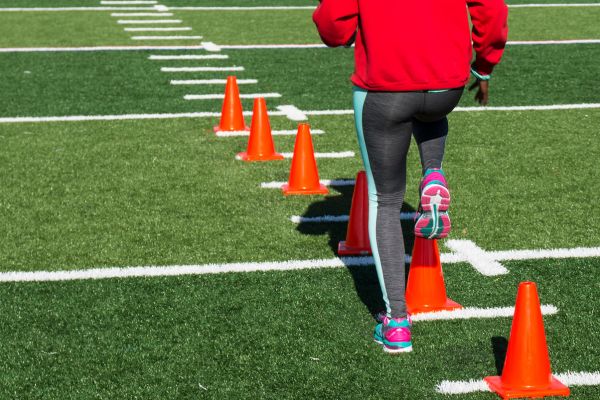
Another version involves performing a skill while counting backward, listening for a cue, or responding to a coach’s signal. For instance, a basketball player may dribble through cones while a coach calls out numbers. When a certain number is called, the player must change direction or take a shot. This forces the athlete to maintain skill execution while processing outside information.
The purpose is not to make practice chaotic for no reason. It is to help athletes learn that focus does not require silence. Strong focus can exist in the middle of noise.
Breathing Drills to Reset the Mind
Sometimes the best focus drill is not fast or flashy. Breathing can be one of the most powerful tools for mental sharpness because it helps calm the nervous system and bring attention back to the present moment.
A simple breathing reset can be used before a serve, shot, sprint, or important play. The athlete inhales slowly through the nose, pauses briefly, then exhales with control. Even one calm breath can create a small mental gap between pressure and action.
This matters because athletes often lose focus when emotion takes over. Frustration after a mistake, excitement after a good play, or fear of failure can all pull attention away from the next moment. Breathing gives the athlete a way to return.
One practical drill is to combine breathing with a routine. Before each attempt, the athlete takes one steady breath, looks at the target, and uses a short cue word such as “smooth,” “ready,” or “control.” Over time, this routine becomes a mental anchor.
Reaction Cue Drills for Faster Decisions
Reaction cue drills are excellent for sports that require quick changes. These drills train athletes to respond to signals instead of moving automatically. They build awareness, decision-making, and concentration at the same time.
A coach might point left or right, call out a color, clap once or twice, or use a whistle to trigger movement. The athlete must react according to the cue. For example, one clap could mean sprint forward, two claps could mean shuffle sideways, and a whistle could mean stop.
The drill can be adjusted for almost any sport. A soccer player may respond by passing to a specific cone. A tennis player may move to forehand or backhand position. A runner may change pace based on a sound cue. The key is that the athlete cannot predict what comes next.
This unpredictability keeps the mind awake. Instead of going through motions, the athlete must stay alert and connected to the present.
Memory-Based Movement Drills
Sports require memory as well as focus. Athletes remember plays, patterns, strategies, body positions, and instructions. Memory-based movement drills challenge the brain and body together.
One example is a sequence drill. A coach gives a short movement pattern, such as sprint, backpedal, side shuffle, jump, and turn. The athlete must remember and complete the sequence correctly. As focus improves, the sequence becomes longer or faster.
Another version uses numbered cones. The coach calls out a series of numbers, and the athlete must move to those cones in order. This drill trains listening, recall, movement, and focus under light pressure.
These exercises are especially useful because they reflect real sport situations. During a game, athletes often have to remember instructions while moving, scanning, and reacting. The more comfortable they become with this mental load, the more composed they feel during competition.
Mindful Repetition During Basic Skills
Many athletes lose focus during basic drills because the movement feels familiar. Passing, dribbling, catching, swinging, or shooting may become automatic. But this is exactly where mindful repetition can help.
Instead of rushing through repeated actions, the athlete chooses one detail to focus on. A basketball player may focus on follow-through. A footballer may focus on first touch. A runner may focus on arm rhythm. A tennis player may focus on contact point.
This turns ordinary practice into concentration training. The athlete is not just repeating the skill but paying attention to quality. It also prevents careless habits from slipping into training.
Mindful repetition does not mean overthinking every movement. It means giving the mind one clear job. That small shift can make practice more useful and performance more consistent.
Focus Drills Under Fatigue
It is easy to focus when the body is fresh. The real challenge comes when fatigue sets in. Tired athletes often make slower decisions, lose form, or become emotionally reactive. That is why sports focus drills should sometimes be practiced near the end of a workout.
For example, after a conditioning set, an athlete can complete a precision task such as hitting a target, making a pass, or performing a controlled movement pattern. The goal is to stay mentally sharp even when breathing is heavy and muscles feel tired.
This kind of training teaches athletes not to mentally disappear when fatigue arrives. It also builds confidence. When an athlete has practiced focus under tired conditions, competition feels less surprising.
However, fatigue-based focus drills should be used carefully. The purpose is not to exhaust athletes until their form breaks down. It is to create enough challenge that the mind must work, while still keeping movement safe and controlled.
Creating a Personal Focus Routine
Every athlete benefits from having a personal focus routine. This routine can be short, but it should be consistent. It might include a breath, a cue word, a quick visual check, or a simple physical gesture like adjusting grip or setting the feet.
The beauty of a routine is that it gives the mind something familiar to return to. In stressful moments, athletes do not need to search for calm. They already have a practiced path back to it.
A good routine should feel natural, not forced. It should match the sport and the athlete’s personality. Some athletes prefer quiet internal cues. Others respond better to physical rhythm. What matters most is that the routine brings attention back to the next action.
Over time, this routine becomes part of performance. It helps separate the last mistake from the next opportunity, which is one of the most valuable mental skills in sports.
How Often Athletes Should Practice Focus Drills
Focus training does not need to take over practice. In fact, it often works best when added in small, regular amounts. Five to ten minutes of focused mental drills several times a week can make a real difference.
The key is consistency. Doing one long focus session occasionally is usually less useful than adding short attention challenges into normal training. Coaches and athletes can place these drills at the start of practice to wake up the mind, in the middle to sharpen decision-making, or near the end to test focus under fatigue.
It also helps to rotate drills. Visual tracking, reaction cues, breathing resets, and memory-based movement all train slightly different parts of mental sharpness. A balanced approach keeps training fresh and more complete.
Conclusion
Focus is not just a mental bonus in sports. It is a performance skill. It shapes reaction time, decision-making, emotional control, and consistency. When athletes learn to place their attention where it matters, they give their physical abilities a better chance to show up when pressure rises.
Sports focus drills help build that skill in a practical way. They teach athletes to track movement, manage distractions, reset after mistakes, remember instructions, and stay present even when tired. None of these habits appear overnight, but with regular practice, they become part of how an athlete competes.
In the end, mental sharpness is often built in quiet moments of training. A breath before a shot. A quick reaction to a cue. A clean movement repeated with attention. These small details may not always look dramatic, but they can change how an athlete performs when the game truly matters.