
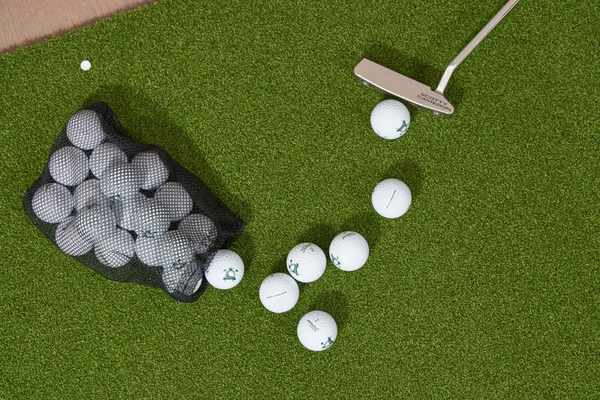
Putting accuracy is not just about making a smooth-looking stroke. A good putt must start on the intended line, travel at the right speed, and match the break you have read. The most useful way to improve is to separate putting into skills you can measure: aim, start line, pace, and green reading.
That approach keeps you from rebuilding your technique after every miss. Use simple checkpoints and putting drills that tell you what happened, then work on the part that needs attention.
Build a Setup You Can Repeat
Your setup should make it easy to aim the putter face and return it consistently. Set the putter face to your intended start line first, then build your stance around it. Your feet do not have to be perfectly square, but the overall setup should feel balanced and repeatable.
Keep grip pressure comfortable rather than tight. Let your arms hang naturally and make a rehearsal stroke that matches the distance of the putt. Avoid chasing one supposedly perfect ball or eye position. The better checkpoint is whether you can aim reliably, strike the ball cleanly, and reproduce the motion.
Make Putter Face Control a Priority
On short and medium putts, the direction of the putter face at impact has a major influence on where the ball starts. That makes putter face control one of the clearest areas to train. Your stroke does not need to look perfectly straight back and straight through; many good strokes have some natural arc. What matters is returning the face predictably and starting the ball where you intended.
Use a Start-Line Gate
Find a straight putt of about four to six feet. Place two tees a short distance in front of the ball, just wide enough for it to pass between them. Aim the gate on your chosen line and hit ten putts. Do not score only makes and misses. First count how often the ball passes cleanly through the gate.
If you repeatedly miss the same side, check your face aim before changing your mechanics. A golfer can unknowingly aim left or right and compensate during the stroke. Keep the gate reasonably wide at first and narrow it only as your start line putting becomes more consistent.
Use a Ruler or Straight Edge
A ruler, narrow alignment board, or straight chalk line gives immediate feedback. Set it on a flat section of the practice green and roll the ball along it. If the ball leaves the line almost immediately, the start direction needs work. This drill replaces guesswork with visible feedback.
After a few successful repetitions, remove the aid and hit putts from the same spot. The goal is to learn the feel and picture of a well-started putt, then reproduce it normally.
Practise Distance Control Separately
A putt can start perfectly and still leave a difficult next putt if the pace is poor. On longer putts, distance control becomes increasingly important. A simple ladder drill helps train it without being distracted by whether the ball goes in.
Place markers at roughly 15, 25, and 35 feet. Roll three balls to each distance and try to stop them inside a small zone around the marker. On the next round, change the order of the targets so you must adjust rather than repeat one stroke length.
For example, imagine a 30-foot uphill putt during a round. Instead of thinking only about making a bigger stroke, make a rehearsal that matches the energy needed to finish the ball around the hole. That connection between rehearsal and intended pace makes distance practice more useful on the course.
Natural related topics include distance-control putting drills, a short-game practice routine, and how to read putting greens.
Match Your Read to Your Pace
Line and speed are connected. A firmer putt generally takes less break, while a slower putt has more time to be influenced by slope. Before choosing a start line, decide how you want the ball to arrive at the hole. Then choose a line that matches that pace.
On longer or unfamiliar putts, look at the overall slope first and pay special attention to the final few feet near the hole, where the ball is moving more slowly. Once you have chosen a read and pace, commit to them. Constantly changing your mind over the ball makes a confident stroke harder.
Add Light Pressure to Your Putting Drills
Practice changes when the result matters. Place several balls in a circle around the cup at about three feet and try to make each one. Every putt presents a slightly different angle, so you must reset your aim and routine instead of repeating the same stroke.
Use your normal process for every ball: read the putt, choose a start line, aim the face, rehearse the pace, and roll it. Once the first distance becomes comfortable, move farther away or require a set number of makes in a row. This turns a technical drill into a small performance test.
Diagnose Misses Before Changing Your Stroke
One missed putt is not enough evidence to rebuild your technique. Look for patterns over several attempts. If the ball repeatedly starts left or right of your intended line, investigate aim and face control. If it starts correctly but finishes well short or long, work on pace. If start line and pace appear good but the ball consistently misses on the expected side, revisit the read.
This diagnosis helps you improve putting stroke control without unnecessary changes and gives each practice session a clear purpose.
FAQ
What is the best drill to improve putting accuracy?
A start-line gate is an excellent place to begin because it gives immediate feedback. Place two tees just wider than the ball a short distance ahead and practise rolling through them before worrying about whether every putt drops.
How often should I practise putting?
Short, focused sessions several times a week can be effective if each session has a clear goal. Ten to fifteen minutes of measured start-line or distance practice is usually more useful than repeatedly hitting putts without tracking the result.
Should my putter move straight back and straight through?
Not necessarily. Many effective putting strokes have a natural arc. Prioritise predictable contact, face control, and a ball that starts on your chosen line rather than forcing a particular stroke shape.
Why do I miss short putts when my stroke feels good?
Check aim first. A slightly misaligned putter face can send the ball away from the intended line even when the motion feels smooth. A gate or straight-line drill helps separate aiming and face-control problems from general stroke feel.
Make Accuracy Measurable
Better putting becomes less mysterious when you practise outcomes you can see. Build a repeatable setup, train the ball to start on your chosen line, develop distance control separately, and connect every read to a specific pace. Then add enough pressure to make your routine matter. When practice tells you what went wrong, you can make smaller, smarter adjustments and build a more reliable stroke.