
There’s a quiet science behind every powerful sprint, every perfectly timed jump, and every smooth, controlled swing. It isn’t always visible to the eye, yet it shapes how athletes move, perform, and improve. That science is biomechanics in sports, and once you begin to notice it, you start seeing sport in an entirely different way.
At its core, biomechanics explores how the body moves—how muscles, bones, and joints work together under the laws of physics. But beyond definitions, it’s really about understanding why certain movements feel effortless while others strain the body, and how small adjustments can unlock better performance.
The Foundation of Movement and Performance
Biomechanics in sports begins with a simple idea: every movement follows physical principles. When a runner pushes off the ground, forces are exchanged. When a tennis player swings a racket, energy transfers through the body in a coordinated chain.
What makes this fascinating is how precise these interactions are. Even a slight misalignment in posture or timing can reduce efficiency or increase the risk of injury. Athletes who move well aren’t just strong—they are efficient. Their bodies use just enough energy, directed in exactly the right way.
This is why two athletes with similar strength levels can perform very differently. One might glide across the field, while the other appears to struggle. The difference often lies in biomechanics.
How the Body Becomes a System of Levers
The human body operates much like a system of interconnected levers. Bones act as rigid structures, joints serve as pivot points, and muscles provide the force that drives movement.
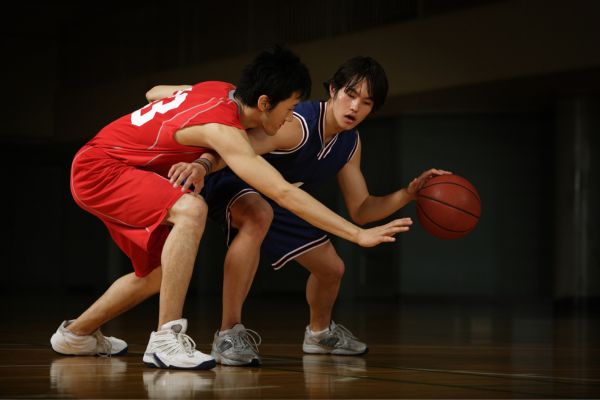
In sports, this system becomes highly refined. A sprinter, for example, relies on rapid hip extension and knee drive to generate forward momentum. A basketball player uses coordinated joint movements to convert stored energy into explosive jumps.
What’s remarkable is how these movements are not isolated. The body works as a chain. Energy flows from one segment to another, often starting from the core and moving outward. This concept, sometimes called the kinetic chain, is central to biomechanics in sports. When one link in the chain is weak or mistimed, the entire movement can suffer.
Efficiency: The Hidden Advantage
Efficiency is often the difference between good and exceptional performance. In biomechanics, efficiency means achieving maximum output with minimal wasted energy.
Take distance running. The most successful runners tend to have smooth, economical strides. Their movements are consistent, controlled, and free of unnecessary motion. They don’t just run fast—they run smart.
This efficiency doesn’t come by accident. It develops through practice, awareness, and often, subtle corrections. Coaches and trainers analyze stride patterns, joint angles, and timing to help athletes refine their movements.
Over time, these refinements lead to noticeable improvements. The athlete feels less fatigued, recovers faster, and performs more consistently.
Injury Prevention Through Better Mechanics
One of the most practical applications of biomechanics in sports is injury prevention. When the body moves in ways that place excessive stress on certain joints or tissues, problems begin to develop.
Consider a runner with poor alignment in the knees. Each step may place uneven pressure on the joints, eventually leading to discomfort or injury. Similarly, a weightlifter with improper lifting technique might strain the lower back.
Biomechanics helps identify these issues early. By analyzing movement patterns, experts can pinpoint inefficiencies or imbalances and suggest corrections. Sometimes, the solution is as simple as adjusting posture or improving muscle activation.
What’s interesting is that injury prevention often overlaps with performance enhancement. When movement becomes safer, it usually becomes more efficient as well.
The Role of Technology in Modern Sports Biomechanics
In recent years, technology has transformed how biomechanics in sports is studied and applied. High-speed cameras, motion capture systems, and wearable sensors allow for detailed analysis of movement in ways that were once impossible.
Athletes can now see their own movements frame by frame, gaining insights that were previously reserved for elite professionals. Coaches can track changes over time, identifying patterns and making data-driven decisions.
This doesn’t mean sport has become purely technical. There’s still an art to movement, an instinct that athletes rely on. But technology provides a clearer understanding of what’s happening beneath the surface.
Biomechanics Across Different Sports
While the principles remain consistent, biomechanics in sports takes on unique forms depending on the activity.
In sprinting, the focus is on maximizing force production and minimizing ground contact time. Every fraction of a second matters, and even slight improvements in stride mechanics can have a significant impact.
In swimming, biomechanics shifts toward fluid dynamics. The goal is to move efficiently through water, reducing drag while maintaining propulsion. Body position, stroke technique, and timing all play critical roles.
In sports like golf or baseball, rotational mechanics become central. The transfer of energy from the lower body through the torso and into the arms determines the power and accuracy of a swing.
Each sport presents its own challenges, but the underlying idea remains the same: movement can always be refined.
The Mind-Body Connection in Movement
Biomechanics isn’t just about physical structures; it also involves awareness. Athletes who understand their own movements tend to perform better because they can make adjustments in real time.
This awareness often develops gradually. At first, movements may feel awkward when changes are introduced. But with repetition, they become natural.
There’s a certain rhythm to well-executed movement. It’s not forced or rigid. Instead, it feels almost intuitive. This is where biomechanics and experience intersect, creating performance that looks effortless but is anything but simple.
Training with Biomechanics in Mind
Incorporating biomechanics into training doesn’t require complex equipment or advanced knowledge. Sometimes, it starts with paying attention to how movements feel.
Athletes might focus on posture, balance, and coordination. They may work on strengthening specific muscle groups to support better mechanics. Over time, these small efforts build a foundation for more efficient movement.
Coaches often play a key role here, providing feedback and guidance. But even without formal coaching, athletes can benefit from observing their own movements and making gradual adjustments.
What matters most is consistency. Biomechanics in sports is not about quick fixes; it’s about long-term improvement.
The Subtle Art of Continuous Improvement
One of the most intriguing aspects of biomechanics is that there’s always room for refinement. Even elite athletes continue to adjust and improve their movements.
These changes are often subtle. A slight shift in foot placement, a minor adjustment in arm swing, or a more controlled landing can make a meaningful difference.
This ongoing process keeps athletes engaged. It’s not just about achieving a goal but about understanding the body more deeply and unlocking new levels of performance.
Why Biomechanics Matters Beyond Elite Sports
While biomechanics is often associated with professional athletes, its relevance extends far beyond elite competition. Anyone who participates in physical activity can benefit from understanding how their body moves.
Whether it’s running, cycling, or simply staying active, better mechanics lead to more enjoyable and sustainable movement. It reduces the risk of injury and enhances overall performance, regardless of skill level.
In this sense, biomechanics in sports becomes a tool for lifelong health, not just competitive success.
A Deeper Appreciation of Movement
Once you begin to understand biomechanics, sports take on a new dimension. You start noticing the precision behind every movement, the balance between force and control, and the constant interplay between structure and motion.
It’s no longer just about speed or strength. It’s about how those qualities are expressed through movement.
Conclusion
Understanding biomechanics in sports reveals the hidden layers of athletic performance. It shows that movement is not random but carefully structured, influenced by both physical laws and individual technique.
From improving efficiency to preventing injuries, biomechanics offers insights that benefit athletes at every level. It encourages a more thoughtful approach to training, one that values precision as much as effort.
In the end, biomechanics isn’t about complicating sport—it’s about understanding it. And in that understanding, there’s a quiet advantage, one that transforms not just how we perform, but how we experience movement itself.