
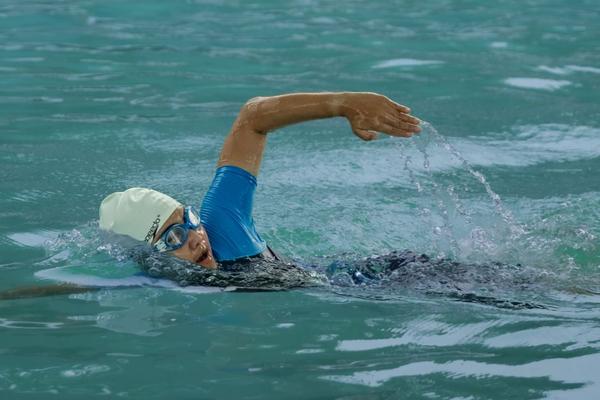
Fast freestyle rarely feels like a fight with the water. Strong pool racers travel forward while their head stays quiet, their hips remain high, and their arms hold water instead of slipping through it. Improving freestyle swimming technique means coordinating those movements, not simply increasing effort. A swimmer can raise stroke rate and still lose speed if every breath or hand entry creates drag.
Whether your target is a sharp 50-metre sprint or a controlled 400-metre race, the same fundamentals matter: balance, propulsion, breathing and repeatable timing. Start by finding which part of your stroke breaks down first when the pace increases.
Build a Body Position That Reduces Drag
Good freestyle form begins with a long, horizontal body line. Keep your neck relaxed and look toward the pool floor rather than lifting your chin toward the wall. The hips and legs should follow close to the surface. When the head rises, the lower body often sinks, forcing the kick to work harder.
Lengthen from head to toes without stiffening your back. Keep your core gently engaged and allow the shoulders and hips to rotate together as each arm works. This controlled rotation supports the pull and recovery; rolling excessively can make you wobble from side to side.
Try swimming 25 metres while watching the black line on the bottom. Notice whether your eyes lift whenever a hand enters. A stable gaze is a useful sign of better alignment.
Turn the Catch Into Forward Movement
Enter Cleanly and Set the Forearm
The freestyle stroke gains much of its propulsion underwater. Enter the hand ahead of its shoulder, fingertips first, rather than crossing the centreline. Extend forward comfortably, then angle the fingertips and forearm to press water backward. The elbow stays relatively high during this early catch, although its exact position varies with mobility and pace.
A common mistake is pushing downward with the palm, lifting the front of the body instead of moving forward. Another is rushing the pull before establishing pressure. Focus on feeling resistance along both hand and forearm, not just moving the arm faster.
Pull Through and Recover Smoothly
Maintain backward pressure as the hand passes beneath you, then release near the thigh. Return the arm forward without unnecessary tension. Some swimmers favour a bent-elbow recovery; others use a straighter arm at sprint speed. Neither should force a painful shoulder position. Keep each hand entry aligned approximately with its shoulder.
Short sculling drills help develop the sensation of holding water. Pair 25 metres of sculling with 25 metres of normal freestyle, carrying that pressure into the full stroke. More focused freestyle catch drills can build on this exercise.
Control Swim Breathing Without Lifting Your Head
Breathing should fit into the body roll rather than interrupt it. Turn with the torso, let the mouth clear the surface briefly, and return the face down before the recovering hand enters. Many swimmers keep the lower goggle near the water while inhaling. Looking forward or toward the ceiling usually adds drag.
Exhale steadily underwater so you do not have to empty your lungs and inhale during the same brief opening. Avoid holding your breath until the last moment. Calm swim breathing also reduces the temptation to spread the legs for balance.
You do not have to breathe every three strokes. Bilateral breathing is useful in practice for comfort on both sides, but racing demands enough oxygen for the effort. During a hard 200-metre swim, forcing long breath holds can be counterproductive. Practise every-two-stroke breathing as well as alternating sides, then compare your rhythm. Dedicated swim breathing drills can help if one side feels awkward.
Use the Flutter Kick for Balance and Speed
The freestyle kick starts primarily at the hips, with a small knee bend and relaxed ankles. Keep the legs relatively narrow; large bicycle-like kicks and wide scissor movements increase resistance. Imagine your feet moving within a narrow corridor behind your body.
Kick intensity depends on distance. A six-beat kick can support fast sprinting, while some distance swimmers use an economical two-beat rhythm. No universal kick count works for everyone. Test whether your kick supports rotation and body position without exhausting you before the final length.
Coordinate Your Arms, Hips and Stroke Rate
Efficient front crawl technique is partly a timing skill. As one arm finishes underwater work, the other prepares its catch. The hips rotate in coordination, and the kick stabilises the transfer. A prolonged pause out front might feel streamlined but can create a dead spot at race pace.
Count strokes over 25 metres and record your time. If you take fewer strokes but become much slower, you may be over-gliding. If you add several strokes without swimming faster, your catch may be slipping. Seek a combination of stroke length and rate that holds up under fatigue. A swimming stroke rate guide can help you interpret those numbers.
Practise One Correction, Then Test It
Rather than changing everything at once, connect one drill to one measurable improvement. Suppose your right arm crosses inward after a left-side breath. Complete four rounds of 25 metres of controlled side-balance practice followed by 25 metres of freestyle. Focus on returning the head before hand entry, then check whether the right hand now enters ahead of its shoulder.
After warming up, try six 50-metre repeats with enough rest to preserve form. On the first two, focus on head position; on the next two, the catch; on the final two, maintain both at a stronger pace. Record times, approximate stroke counts and when technique deteriorates. A coach or short poolside video can reveal problems you cannot feel.
In races, preserve your body line as speed rises. A powerful start, streamlined push-off and tidy turn matter, but cannot rescue inefficient swimming between the walls. Useful freestyle swimming technique survives race pressure without sacrificing breathing or propulsion.
Frequently Asked Questions
What matters most in freestyle swimming technique?
A balanced, horizontal body position is a strong starting point because excess drag undermines everything else. Once aligned, refine the catch and breathing timing rather than simply pulling harder.
Should I breathe every two or three strokes?
Both can work. Every three strokes develops comfort on either side, while every two provides more frequent air during hard efforts. Choose a pattern that keeps your head movement small and supports your pace.
How do I stop my hips from sinking?
Keep the head neutral, maintain gentle trunk tension and avoid lifting to breathe. Check that your kick stays compact, then practise short relaxed lengths before adding speed.
Is faster stroke turnover always better?
No. Higher turnover helps only if the hands still catch effectively and the body remains streamlined. Compare your time and strokes per length rather than chasing a number.
Bring the Pieces Together
Freestyle gets faster when improvements reinforce one another: quiet head, smooth rotation, effective forearms and a supporting kick. Practise one correction at a time, then test it at real race speeds. Efficient swimming is not automatically slow swimming; it is how you spend more of each stroke moving forward.