
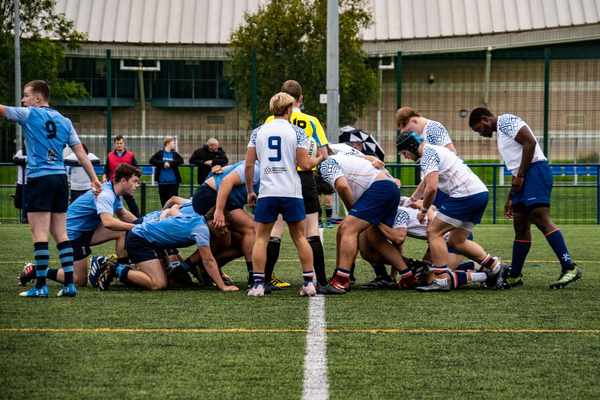
A single whistle can transform a rugby match. One team might take three points, kick deep into opposition territory, or attack immediately before the defence resets. Understanding rugby penalty rules means knowing both why the referee stopped play and what the awarded team can do next. This guide focuses on rugby union, where penalties are more than punishments: they shape possession, territory and the scoreboard.
When Does a Referee Award a Penalty?
A penalty is awarded for certain breaches of rugby’s laws, including offside play, failures to release at a tackle, dangerous contact and intentional obstruction. The referee identifies the infringement and indicates which team has the penalty. Not every mistake earns this sanction: an ordinary accidental knock-forward, for example, generally leads to a scrum rather than a penalty.
Common Rugby Fouls That Lead to Penalties
Offside and interfering with play
At rucks and mauls, defenders must respect the applicable offside line. A player who moves ahead of it to tackle or obstruct an opponent risks conceding a penalty. In open play, being ahead of a teammate who last played the ball is not automatically an offence; the issue is what the offside player does and whether they comply with the law. Learning the rugby offside rule makes many apparently mysterious decisions easier to follow.
Not releasing at a tackle
The tackled player must make the ball available promptly. The tackler must release the ball-carrier, move away or get up, and be on their feet before playing the ball. Arriving players must enter legally from their own side and stay on their feet. A defender who legally contests the ball while the carrier holds on may win the penalty; a tackler who clings on can instead concede one.
Illegal ruck and maul actions
Entering from the side, interfering from an offside position, or deliberately collapsing a ruck or maul can bring penalties. Dangerous clear-outs are also prohibited. Legal breakdown play is a contest for the ball, not permission to pull an opponent down or launch into contact without control.
Dangerous tackles and obstruction
Late tackles, dangerous head contact, no-arms charges and playing a person without the ball are among the serious rugby fouls. The current tackle framework also distinguishes applicable tackle-height standards across levels of the game. Obstructing an opponent’s chance to make a tackle can produce a penalty even without a spectacular collision. Safety and intent help determine whether additional discipline follows.
Scrum and repeated team offences
Intentional scrum collapses and dangerous front-row conduct attract penalties. Other scrum technical errors may instead produce free-kicks, so not every reset or whistle means the same thing. A team repeatedly offending near its own try line can also face escalating referee penalties, including a team warning and yellow card.
Penalty Kick Options: What Can the Team Choose?
Kick at goal for three points
A successful penalty goal earns three points. This is attractive when the mark is within the kicker’s comfortable range and the game is close. Once the team has indicated its intention to kick at goal, it must follow through with that attempt. The decision trades a chance at a try for a potentially reliable score.
Kick to touch and take the lineout
A team can kick the penalty into touch to gain territory. Unlike a normal kick into touch, a penalty kick used this way generally gives the kicking team the throw at the resulting lineout. That creates an attacking platform, especially near the opposition’s try line. The ball need not bounce before crossing the touchline.
Tap quickly and attack
Taking a quick tap keeps the ball in play and may catch defenders retreating. The ball must be kicked a visible distance; simply touching it with a foot is not enough. Speed offers an opportunity, but the attacking side still needs support runners and a legal starting position. A rushed tap without a plan can waste excellent field position.
Choose a scrum
The awarded team can elect a scrum instead of taking the penalty kick. A strong scrum may draw defenders inward and create space for backs, although it also introduces its own contest and risks. At a penalty awarded during a lineout, the laws additionally provide a lineout option at the same mark.
Where Is the Penalty Taken?
The mark is usually at the infringement or applicable offside line, with specific exceptions. Opponents must immediately retreat ten metres towards their own try line, or to that line if it is closer. They cannot deliberately delay the kick. Continuing to interfere after the award may bring an additional penalty advanced ten metres. A side taking a quick tap does not automatically gain permission to run through opponents who have had no opportunity to retreat, but those players still cannot interfere illegally.
A Match Scenario: Three Points or an Attacking Lineout?
Imagine a team trailing by five points with six minutes remaining. An opponent enters a ruck from the side, giving the attackers a penalty around 30 metres from goal and near the touchline. Three points would still leave them behind. Kicking to touch could set up a lineout close to the try line, where a try might change the result.
When Do Penalties Become Yellow Cards or More?
In standard rugby union, a yellow card means ten minutes off the field. Red-card consequences depend on the offence and competition framework, with specific replacement provisions in elite rugby. If foul play prevents a probable try, the referee may award a penalty try worth seven points, without a conversion attempt, as well as sanctioning the responsible player. For a broader understanding of sanctions, see how rugby yellow and red cards work.
Frequently Asked Questions
What is the difference between a penalty and a free-kick?
A penalty allows a direct attempt at a penalty goal and usually preserves the kicking team’s lineout throw when kicked to touch. A free-kick does not allow a direct penalty goal, and touch and restart rights differ. The precise sanction depends on the law broken.
Can a team take a penalty quickly?
Yes. A player can take a legal tap kick without waiting for the opposition to organise, provided the kick is taken from the permitted place and the ball visibly moves. Defenders remain subject to retreat requirements.
Do all high tackles result in a red card?
No. Dangerous tackle decisions depend on the relevant tackle-height standard, the nature of contact, degree of danger and applicable disciplinary framework. A penalty may be accompanied by a card, but an automatic red card is not the rule for every high-tackle offence.
Can a referee play advantage after a penalty offence?
Yes. If the non-offending side has a real opportunity to benefit, the referee may allow play to continue. Otherwise, play can return to the penalty mark.
Conclusion
The crucial question after a whistle is not simply who broke the rules. It is what the offence cost the team: points, territory, possession or a player. Knowing common rugby infringements and the available restart choices reveals the tactical battle behind every penalty decision.